Private Medical & Dental Clinics
MedScribe
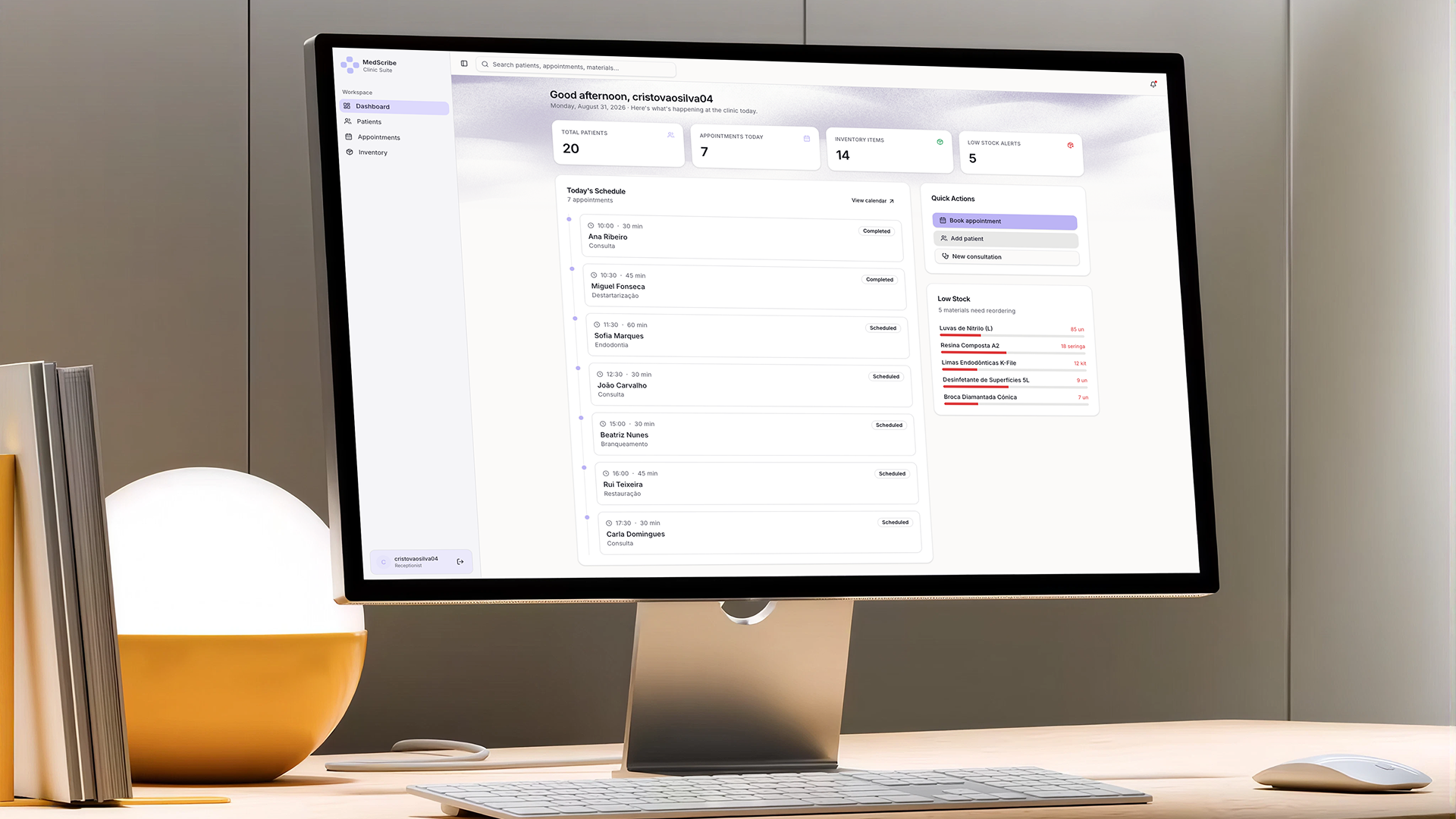
AI-assisted clinical CRM, ambient medical scribe & inventory optimization platform for healthcare clinics
Scope
Healthcare SaaS · AI Medical Scribe · Clinical CRM · Inventory Management · Medical Scheduling · Shadcn UI
My role
Lead Product Designer (Sole Designer) & Frontend Developer — Full ownership of product strategy, user research, workflow architecture, UI component system, and interactive prototype delivery.
Tools


Business Context
& Market Opportunity
Private medical clinics face a triple operational burden:
Documentation Fatigue (Physician Burnout): Doctors spend 30% to 40% of every consultation typing up clinical notes (SOAP notes) instead of focusing on the patient.
Critical Stockouts: Consumables (anesthetics, surgical gloves, resins) are managed on paper or isolated spreadsheets, leading to canceled appointments when stock runs dry.
Software Fragmentation: Receptionists use legacy software for scheduling while patient clinical records live in a separate, slow system.
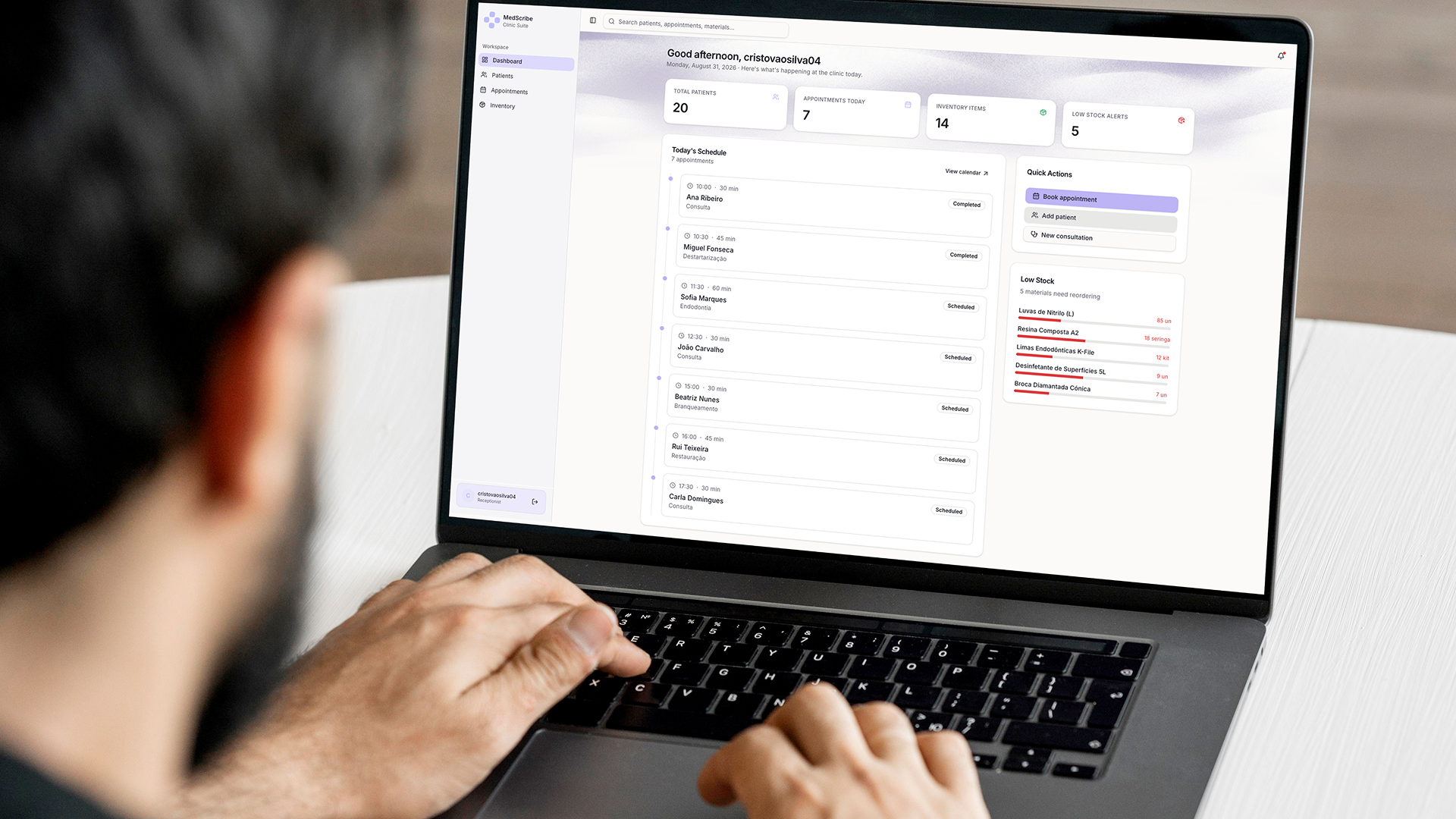
Product Goal: Create a unified platform that acts as a clinical control tower—combining an ambient AI assistant (which listens to consultations and drafts medical reports) with predictive visual inventory tracking.
Research & Discovery
To understand the clinic environment, I conducted contextual interviews and direct observation sessions with doctors and receptionists. I identified two distinct mental models that the interface needed to serve simultaneously:

Persona A: Dr. Aris
DOCTOR / SPECIALIST
Goal: Focus: 100% on patient; Click tolerance: ZERO; Wants AI as a “co-pilot”
Pain Point: Doctors felt that manual report typing disrupted patient trust during visits.
Quote: “I hate looking at a screen while a patient is explaining their symptoms.”

Persona B: Marta
RECEPTIONIST / MANAGER
Strategic Focus: Speed & efficiency; Handling calls & check-ins; Needs clear visual alerts;
Pain Point: A lack of preventive visual indicators led to emergency restocking orders.
Quote: “We only realize we are out of anaesthetic when the drawer is empty.”
Information Architecture
& Key UX Decisions
Based on research findings, I structured the UX around 3 core design decisions
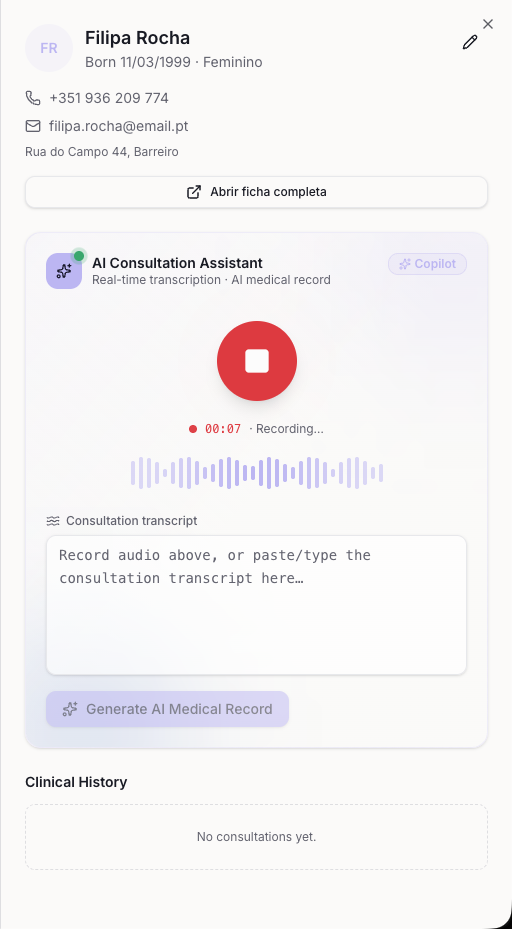
Ambient AI Medical Scribe (Human-in-the-Loop)
With patient consent, the AI listens to the consultation, extracts key clinical insights, and automatically drafts a structured Medical Visit Report (Symptoms, Diagnosis, Prescriptions).
UX Safety Constraint: The practitioner retains full oversight (Human-in-the-loop), able to review, edit, or approve the generated report with a single click before saving it to the patient profile.
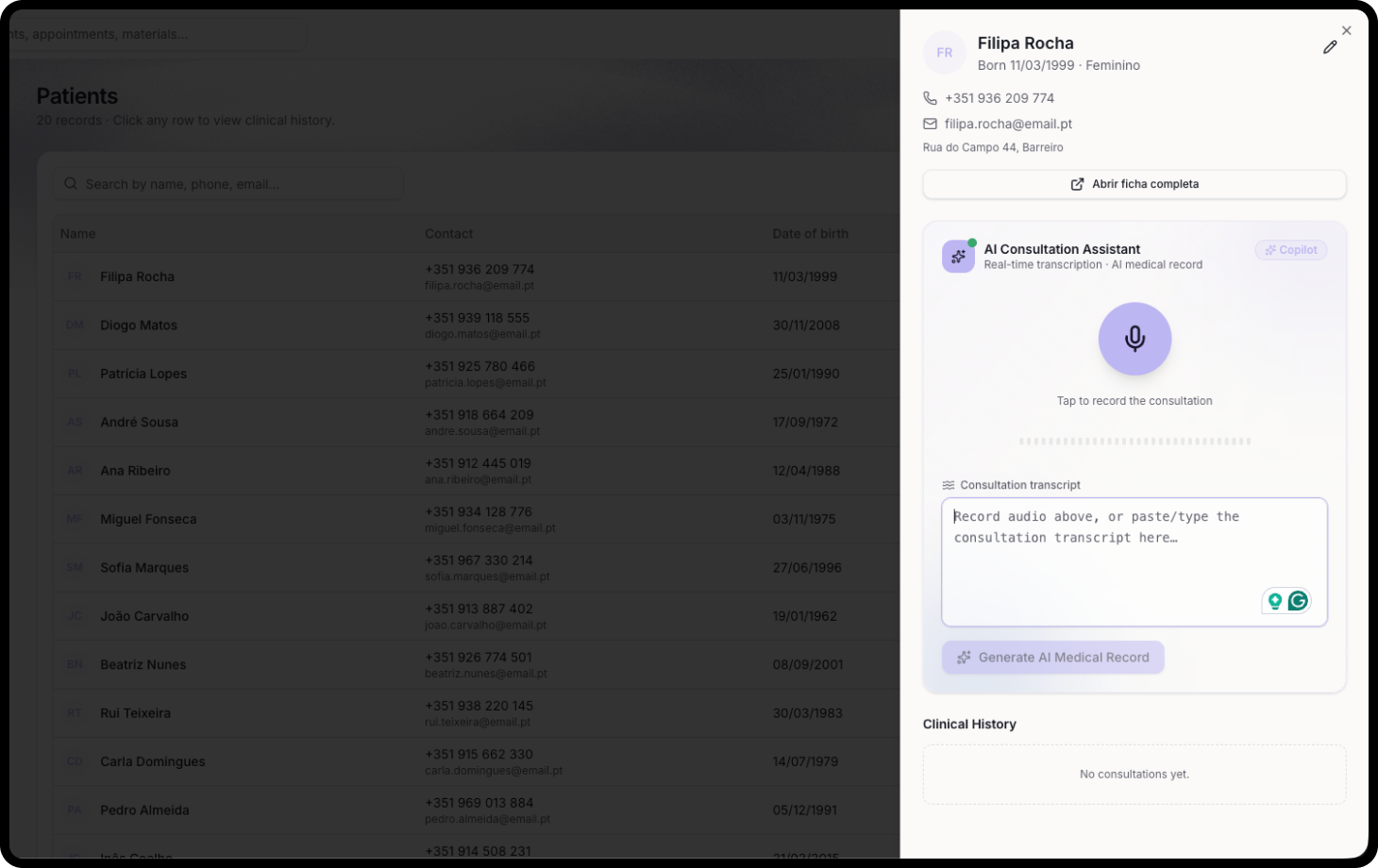
Contextual Clinical Drawer (Zero Context Loss)
Instead of navigating away to separate pages to view patient files, I implemented a Contextual Side Drawer. Clicking on any patient in the schedule instantly opens their visit history, AI notes, and financial balances without losing sight of the main calendar.
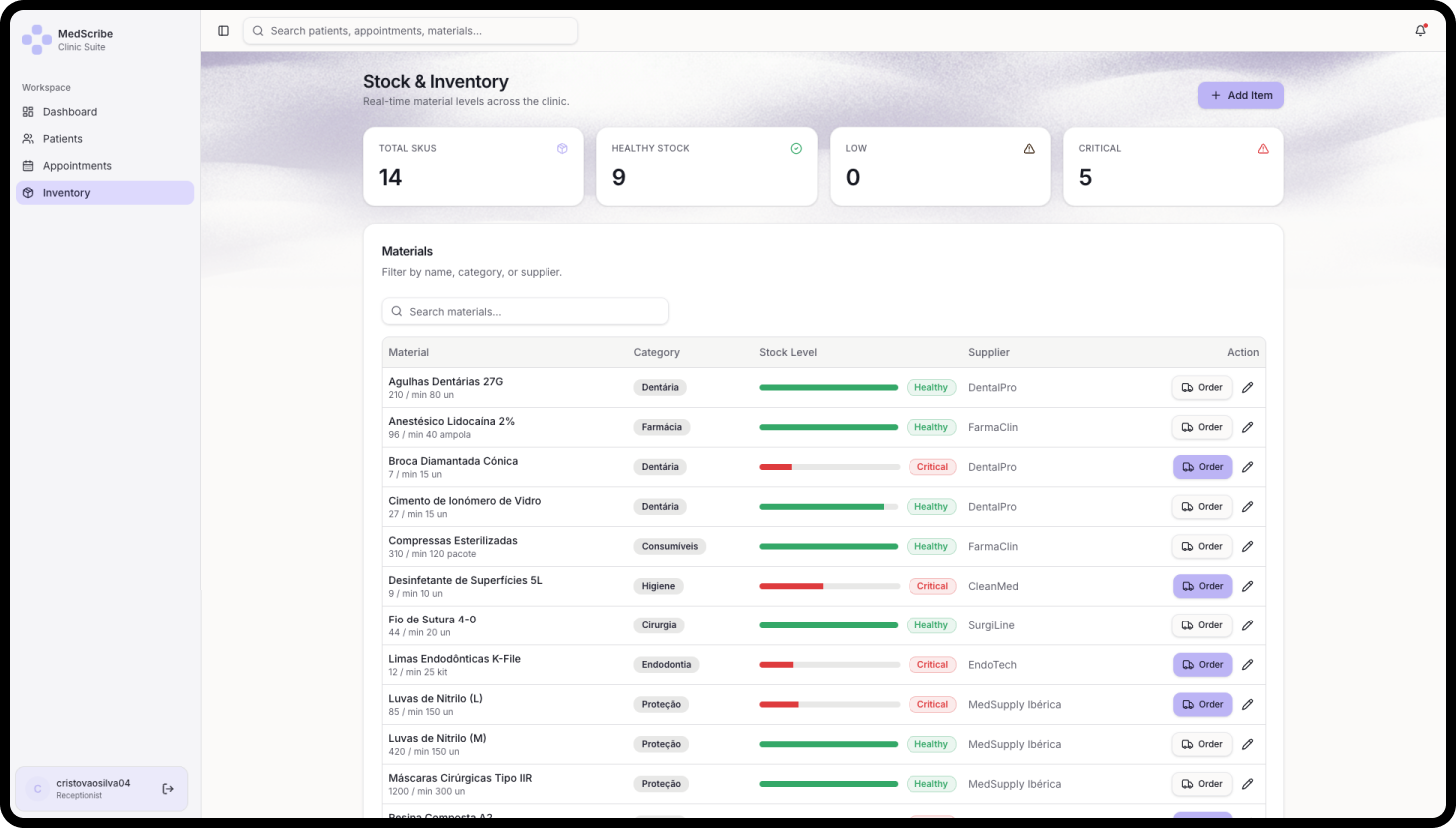
Visual Health-Check Inventory (Traffic-Light System)
I replaced dense numerical tables with color-coded progress bars:
🟢 Green: Safe Stock
🔴 Red: Critical Level (with a direct “Generate Supplier Order” action button)
System Design
& Execution
Based on research findings, I structured the UX around 3 core design decisions
To ensure enterprise scalability and seamless engineering hand-off, I took a Design System-First approach:
Component Library: Built using Shadcn UI and Lucide icons, ensuring WCAG AA accessibility compliance and visual consistency.
Styling & Theme: Tailwind CSS with a clean clinical palette (healthcare blues, soft grays, and high-contrast warning indicators).
Supabase & AI API-Ready: All data structures (patient profiles, AI transcription logs, material stock tables) were designed using normalized JSON schemas, ready for real-time database connection and Speech-to-Text LLM APIs.

Results & Measured Impact
The final prototype was tested in usability sessions with participants from the research phase, yielding strong performance metrics:
⚡ 80% Faster Drafting Time: Medical report creation dropped from ~8 minutes per consultation to under 90 seconds (reviewing and signing the AI-generated report).
📉 Zero Critical Stockouts: Manual inventory check times were reduced by 65% thanks to automated minimum threshold alerts.
⏱️ < 30-Second Booking: New appointment bookings were completed in less than half the steps required by legacy clinical tools.
💻 40% Saved Engineering Time: The production-ready React + Tailwind / Shadcn code provided developers with a clean, fully functional baseline.
What Was Delivered
Enterprise Interactive Prototype: A fully responsive web application optimized for desktop terminals and tablet interfaces.
4 Mission-Critical Modules:
⚬ Ambient AI Consultation Scribe & Medical Report Generator
⚬ Patient Management CRM & Clinical Side-Drawer
⚬ Interactive Calendar & Slot Booking System
⚬ Stock & Inventory Control Dashboard with Automated Reorder Triggers
Modular Design System: A reusable component library prepared for rapid API integration.